Entrepreneur, women's leadership advocate and aspiring Siaya County Woman Representative, committed to inclusive leadership and expanding opportunities for women, youth and communities.
Pollyne Owoko
Entrepreneur | Women's Leadership Advocate | Community Development Champion
Born in Rang'ala, Siaya County, Pollyne Owoko's journey is one of resilience, enterprise and a longstanding commitment to service.
From her early experiences building businesses to her work advancing women's participation in leadership, Pollyne has consistently championed opportunities for those whose voices are often overlooked.
She is a co-founder of the Forum for Young Women in Politics, an initiative supporting mentorship, leadership development and the participation of young women in Kenya's political and public life.
Her professional journey spans entrepreneurship, communications, community development and governance, providing a foundation for her commitment to Siaya County.
A Journey of Leadership & Impact
Pollyne Owoko · Experience & Public Service
A Journey of Leadership & Impact
A journey through public administration, women’s leadership, enterprise and community development, illustrated with authentic photographs from Pollyne’s life and work.
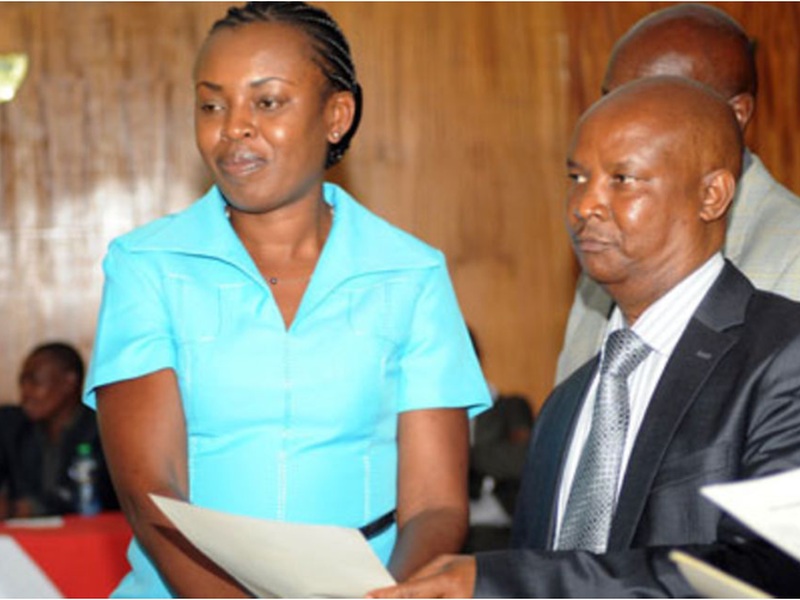
Pollyne Owoko receives her certificate from Governor Kinuthia Mbugua after taking the oath of office, Nakuru, 18 June 2013. Photo: Suleiman Mbatiah / Nation Media Group.
01 · Governance
Governance & Public Service
Pollyne brings experience in political leadership, public administration, land governance and healthcare oversight. Her political journey includes contesting the Makadara parliamentary seat in the 2007 General Election.
She later served as Chairperson of the Kisumu County Land Management Board and was appointed Chairperson of the Molo Sub-County Hospital management board. In 2013, she was also appointed to Nakuru County’s ICT and e-Government executive portfolio.
Her experience reflects longstanding engagement in public leadership, county governance, institutional administration and community development.
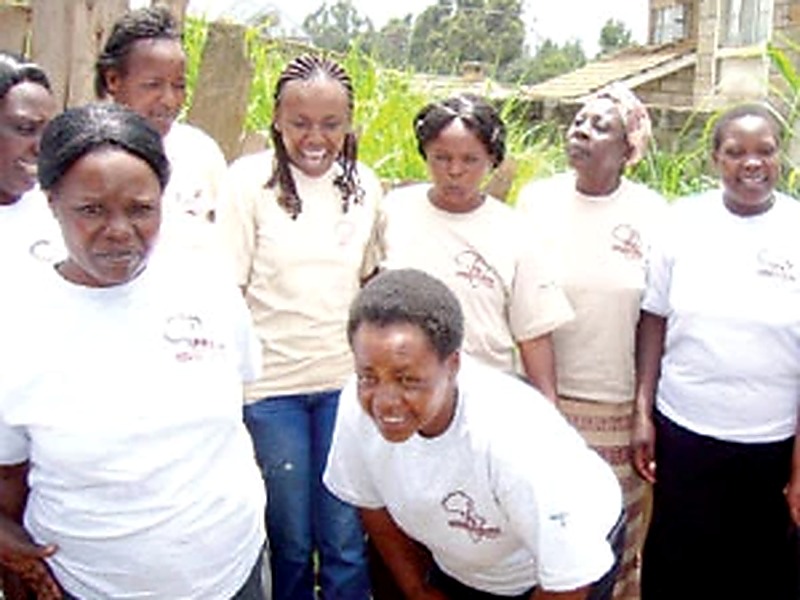
Pollyne Owoko with women she has supported through community empowerment initiatives.
02 · Women’s Leadership
Women’s Leadership & Advocacy
As a co-founder and former Executive Director of the Forum for Young Women in Politics, Pollyne has championed women’s participation, mentorship and opportunities for meaningful leadership.
Her work has also extended to grassroots women’s empowerment and community support initiatives.
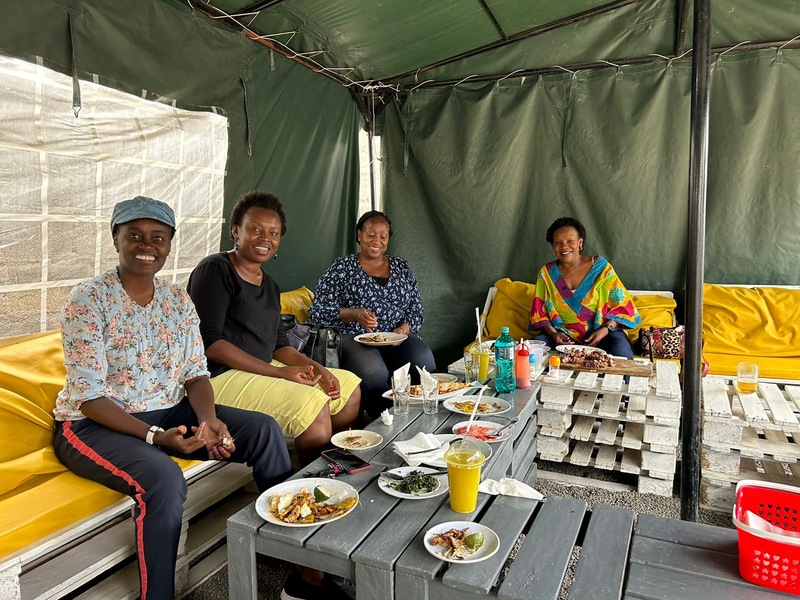
Pollyne Owoko enjoying time with friends at her restaurant, Dada Foods.
03 · Enterprise
Entrepreneurship & Economic Empowerment
Pollyne Owoko’s entrepreneurial journey spans insurance, hospitality, catering, general supplies and community development. She founded Jayvepe Insurance Company and established enterprises including Dada African Dishes, Dada Innovators and Dada General Supplies.
By 2010, her businesses were reported to support six full-time employees and 15 casual workers.
Through Wema Foundation, Pollyne worked to expand economic opportunities for women. In partnership with development organisations, the foundation supported six women’s groups in Mukuru, Huruma and Kibera through entrepreneurship training, microfinance and revolving-fund initiatives.
Her experience combines business ownership, employment creation and grassroots women’s economic empowerment.
Community · Opportunity · Development
Her Vision for Siaya
Leadership • Opportunity • Community Development
Listening to Communities, Building a Better Siaya
Pollyne Owoko envisions a Siaya where every family has a fair opportunity to live with dignity, access essential services and build a sustainable livelihood.
Her vision recognises the everyday challenges facing households across the county: unreliable access to clean water, limited employment opportunities, struggling small businesses, difficulties accessing affordable healthcare, and the financial pressures facing farmers, fishermen and families.
She believes community development must include everyone — women and men, young people, children, older persons and people living with disabilities.
Through parliamentary representation, advocacy, oversight and partnerships with government agencies, development organisations and private investors, Pollyne seeks to champion practical solutions that strengthen household incomes, improve access to essential services and create opportunities across Siaya County.
Her approach is rooted in listening to communities, identifying their priorities and connecting local needs with institutions capable of delivering lasting solutions.
Public information · Constitution of Kenya, 2010
What Does a County Woman Representative Do?
Understanding the office is essential to understanding the distinction between parliamentary responsibility, community advocacy and the day-to-day work of government institutions.
The constitutional foundation: Article 97(1)(b) establishes 47 women elected to the National Assembly, one from each county. Their parliamentary functions flow principally from Article 95, which applies to the National Assembly as a whole. The roles below are exercised through Parliament and its procedures, rather than through an individual office acting alone.
01
Legislation
Participate in making and reviewing national laws, propose legislative changes and contribute to debates and committee work in the National Assembly.
02
Representation
Bring county-wide concerns into national discussions, participate in parliamentary debate and raise matters affecting residents and groups whose interests need attention.
03
Oversight
Use parliamentary processes to scrutinise national government institutions, public expenditure and the implementation of programmes, and seek accountability for decisions and results.
04
Budgeting & Public Finance
Participate in Parliament's consideration of national revenue allocation, appropriations and spending oversight. An individual Woman Representative does not independently approve or control the national budget.
Affirmative action & equality
Advancing Gender Equity and Understanding NGAAF
Women Representatives can advocate for equality, inclusion and opportunities for women, young people, persons with disabilities and other groups through legislative work, representation and oversight.
The National Government Affirmative Action Fund (NGAAF) is a regulated public programme supporting eligible affirmative-action groups. It operates through its statutory management, board and county structures. A Woman Representative may engage with its work and accountability, but the fund is not a personal fund controlled by the elected representative.
What the Office Is Not Mandated to Do
Not a charity office: The constitutional office is a parliamentary seat, not a personal welfare fund or a guarantee of cash assistance to individuals.
Not an executive or management office: A Woman Representative does not, by virtue of that seat, run county departments, manage public hospitals, supervise contractors or implement government projects.
Not a personal budget authority: Public funds, including NGAAF, remain governed by law, approved processes and accountable institutions.
Advocate for reliable access to safe water through
borehole rehabilitation, community water systems,
rainwater harvesting and partnerships with
responsible water agencies.
🏥
Accessible Healthcare
Support improvements in community healthcare,
maternal and child health, preventive services
and access to essential medical facilities
across underserved communities.
💼
Jobs, Enterprise & Youth Skills
Champion vocational training, digital skills,
entrepreneurship support and partnerships
that expand opportunities for employment
and sustainable livelihoods.
🌱
Agriculture, Fishing & Livelihoods
Encourage agricultural value addition,
fish storage and processing, better market
access and investment partnerships that
strengthen household incomes.
🤝
Inclusive Community Empowerment
Support opportunities for women, men, youth,
older persons and people with disabilities
through mentorship, education assistance
and accessible empowerment programmes.
⚖️
Accountable Leadership
Promote public participation, transparent
governance, parliamentary oversight
and constructive engagement with public
institutions on community priorities.
These priorities reflect areas for advocacy,
parliamentary engagement and collaboration with
government institutions, development partners
and local communities.